
Play Is God’s Idea: Why Preschoolers Learn Best Through Play
It might be tempting to think of play in preschool classrooms and children’s ministry as just a fun extra—a way to fill time or give kids a break. But Scripture and brain science tell us something very different.
For preschoolers, play is learning. It is how God wired their hearts, minds, and bodies to discover truth, build relationships, and make sense of His world. When parents, teachers, and ministry leaders take the importance of play seriously, we are not simply “letting kids play.” We are faithfully discipling them. We are helping them grow in the ways God designed, creating spaces where their hearts, minds, and spirits can thrive.
Play is a tool God gave us to meet children where they are, to guide them gently, and to cultivate both joy and growth.
Understanding the importance of play in early childhood helps us lead with wisdom and grace. It gives us eyes to see learning, connection, and formation happening even when it looks like “just play.” And it reminds us that our classrooms and ministry spaces are special places where children’s hearts and minds meet God’s design in real, tangible ways.
God Designed Preschoolers to Learn Through Play
From the very beginning, God revealed Himself as a Creator who delights in curiosity, imagination, and exploration. When He made the world, He gave us a world rich with colors, textures, sounds, and possibilities. Children are designed to experience this world with their whole selves: their eyes, their hands, their voices, and their imaginations.
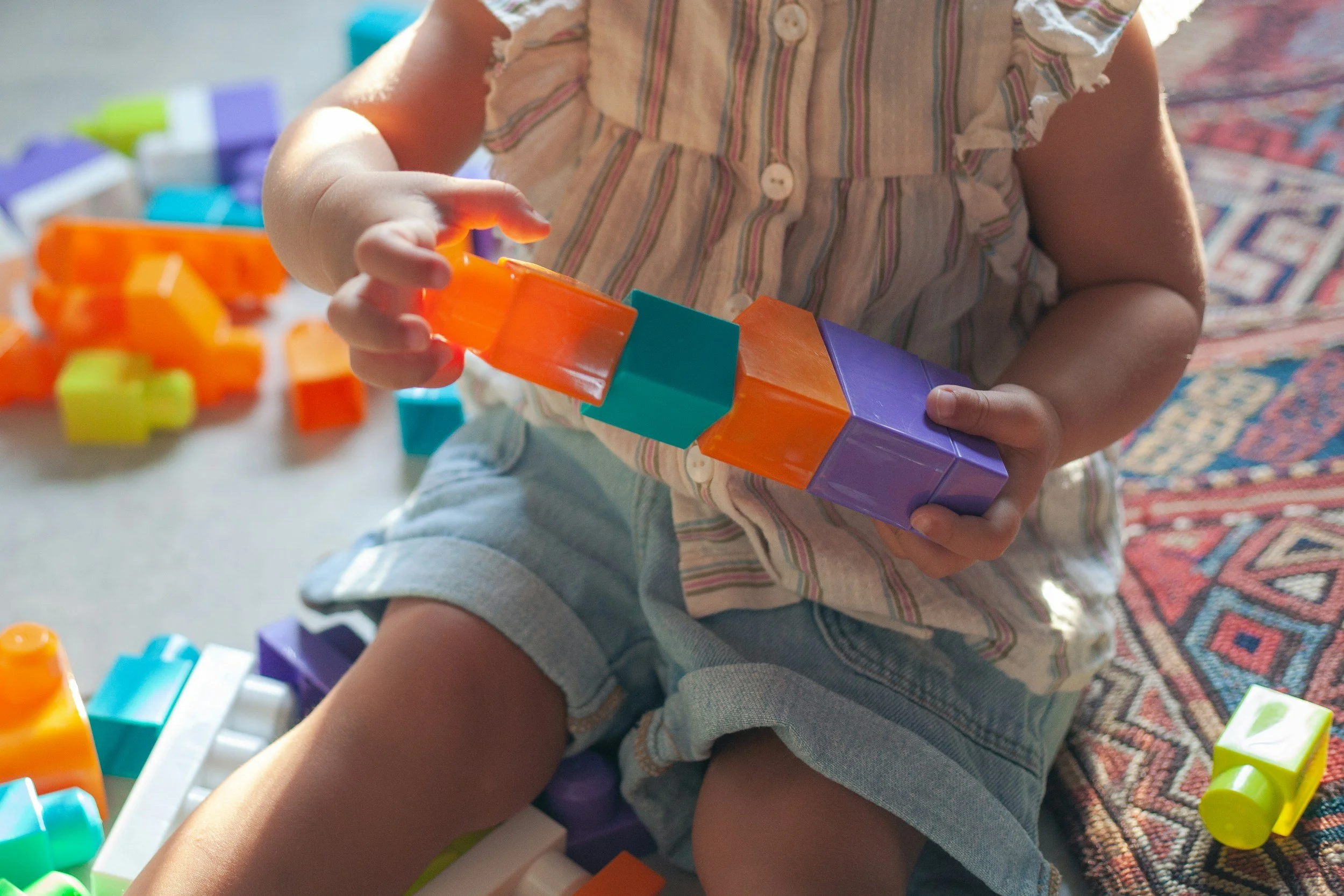
Preschoolers reflect God’s image as they explore, experiment, and create. Just watch young children. They learn by doing, by pretending, by repeating, and by testing what they know. This is the beautiful way God wired them to grow. Every block stacked, every dramatic play story, every moment of pretending is a step in learning about God’s world, other people, and even themselves.
Play is also deeply relational. Through play, children practice connection, communication, and empathy. They learn how to take turns, negotiate, and solve conflicts. They discover joy and trust in the presence of others. They learn that “it’s not good for man to be alone” (Gen. 2:18) and that “two are better than one” (Eccl. 4:9). In short, play is where children practice being human in the way God intended.
The Brain Science Behind Play-Based Learning
Modern research confirms what Scripture and careful observation have long shown: play is essential for healthy development in early childhood.
Through play, preschoolers:
Build neural connections that support language, problem-solving, and memory
Develop self-regulation and emotional control, learning how to manage big feelings
Practice social skills, like sharing, negotiating, and cooperating
Explore cause and effect, testing ideas in a safe, hands-on way
Play activates the brain in ways that formal instruction alone cannot. Movement, imagination, and exploration help children encode learning more deeply. Stress, fear, or constant correction, on the other hand, shuts down learning pathways. Play creates a safe, joyful space where curiosity can thrive—and where growth is natural.
For preschool ministry, this means every block stacked, every pretend tea party, every dramatic adventure is foundational and formative. Play strengthens the very skills children need to understand God’s world, relate to others, and grow in wisdom and joy. By protecting play, we are partnering with God in shaping hearts and minds in ways that last a lifetime.
Rethinking Structure in Preschool Classrooms
However, choosing to prioritize play doesn’t mean choosing chaos. Thoughtful, intentional structure and guidance can coexist beautifully with playful exploration. The difference is in why we structure the classroom and how we guide children.
A gospel-centered preschool classroom:
Values process over product, allowing children to explore ideas rather than just completing tasks
Supports developmentally appropriate learning, giving children time to practice skills at their own pace
Uses play as preparation for deeper learning, rather than as a filler between lessons
When leaders feel pressure to “do more,” it’s easy to cut play in favor of instruction. But in doing so, we remove the very environment children need to grow. Protecting time for play is not a compromise—it is faithful leadership.
Play as Discipleship
When we protect and prioritize play, we are doing more than filling a classroom with toys or activities. We are partnering with God to form hearts that are curious, joyful, and capable of love. We are giving children space to explore His world, practice kindness, and experience the freedom that comes from being fully known and fully loved.
Play is ministry.
Play is discipleship.
Play is one of the ways God invites children to discover His goodness and reflect His image in everything they do.
Let’s play.